Print this handout using your browser’s Print / Save as PDF. Student instructions and practice print; the teacher notes stay on screen.
GRADES 3–5 · Eyes · Simple Portraits
Which Way Are the Eyes Looking?: Use Fewer Lines
Name ____________________ Date __________
WHAT YOU WILL MAKE
Create a detailed first study and a simplified version with five to ten main marks, focusing on which way are the eyes looking?. Use the subject steps as practice before making this final pair or set.
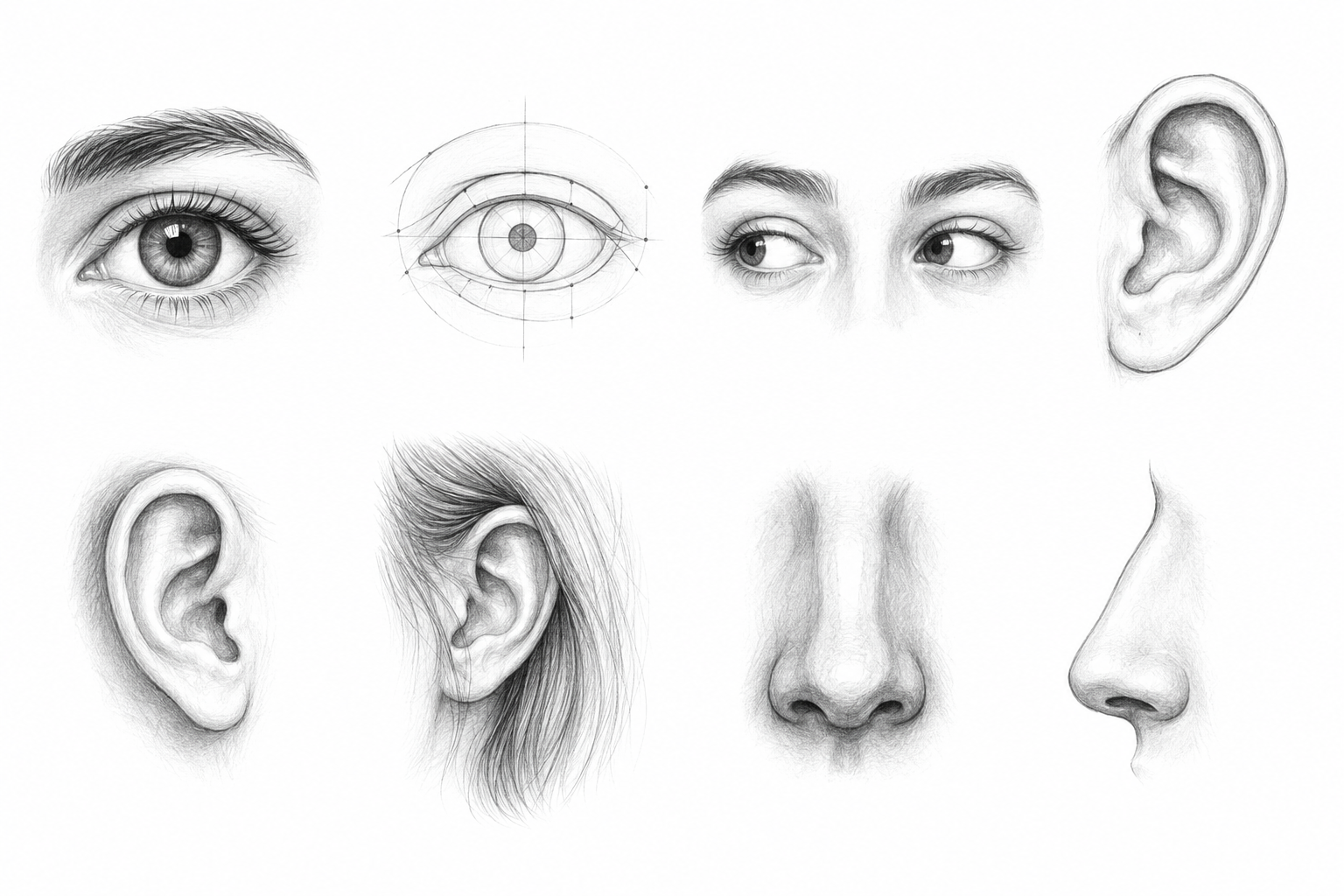
Shared feature reference. It may not show this task’s exact pose, accessory, or style. Use the teacher’s matching reference too.
Draw it step by step
The iris position helps show gaze. Translate the observed feature into a clear, simplified drawing. Keep its identifying shape while reducing detail.
Look at the reference and choose three important curves, angles, or shapes. Make a tiny plan using only those.
Draw three pairs of simple lids.
Place both irises left in one pair, right in another, and forward in the third.
Keep each pair looking together and show them to a partner.
Make a second version with fewer marks. Remove texture and small shadows; keep the outline changes that communicate the form.
Watch out → Try this
Common drawing problem: Adding small details before the main shapes and placement are clear.
Repair: Return to the first subject step: Draw three pairs of simple lids. Compare the biggest shapes before refining.
Check your work: Can a partner tell where each pair looks? Can someone identify the feature in the simpler version? Explain which marks you kept.
Materials: pencil, eraser, paper, and a mirror or teacher-approved reference. Optional black drawing pen; no painting required.
Which Way Are the Eyes Looking?: Use Fewer Lines · Practice page
Name ____________________ Make light trials first. Divide a box further if your task needs extra versions.
1 · Observe and plan2 · First drawing3 · Change one choice4 · Independent application
My evidence: Can a partner tell where each pair looks? Can someone identify the feature in the simpler version? Explain which marks you kept.
I changed __________________ because I noticed __________________.
My next practice goal: __________________________________________________