Print this handout using your browser’s Print / Save as PDF. Student instructions and practice print; the teacher notes stay on screen.
GRADES 3–5 · Proportion · Expressive Portraits
Turn the Head: Change the Mood
Name ____________________ Date __________
WHAT YOU WILL MAKE
Create two related studies labeled with their intended moods, focusing on turn the head. Use the subject steps as practice before making this final pair or set.
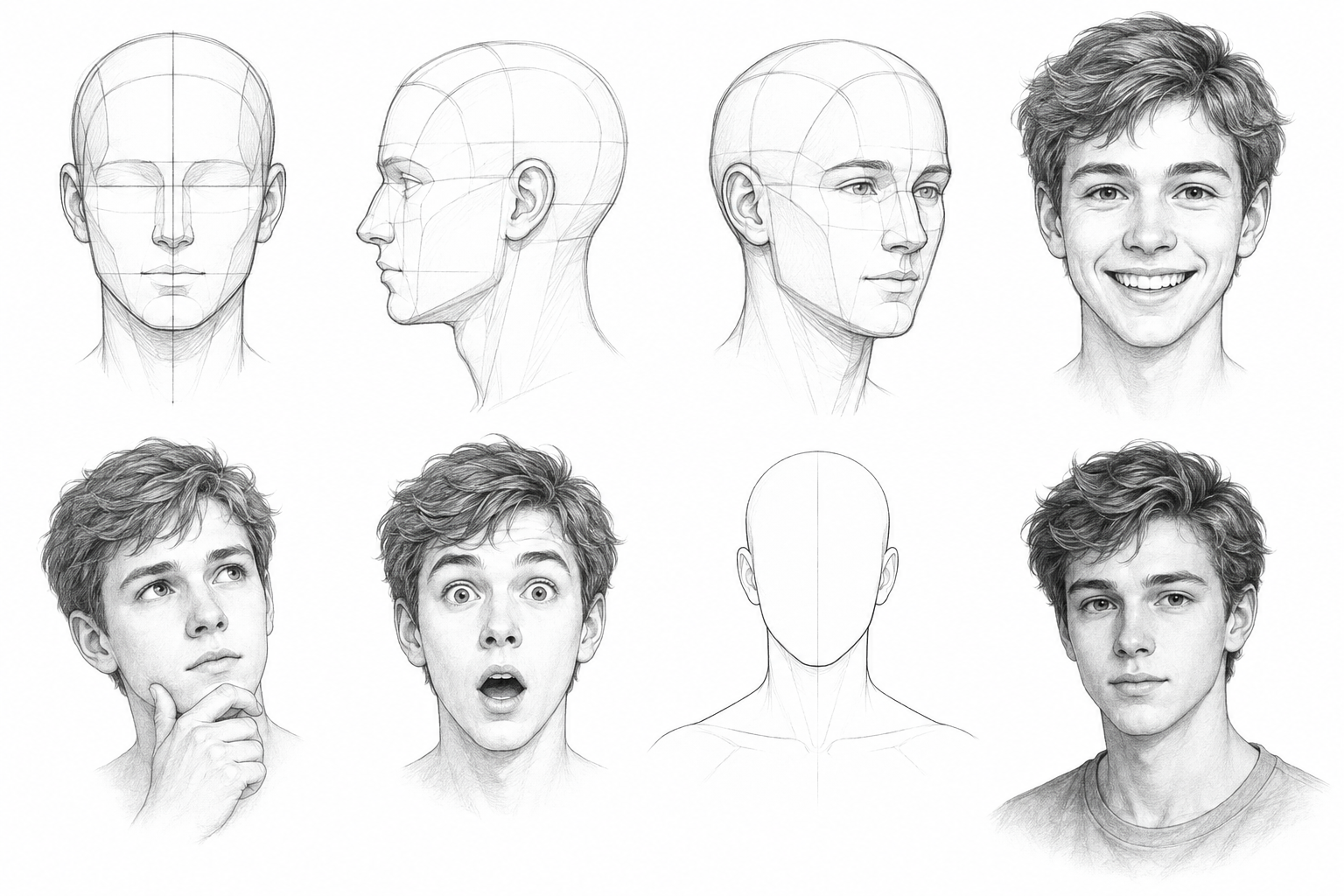
Shared feature reference. It may not show this task’s exact pose, accessory, or style. Use the teacher’s matching reference too.
Draw it step by step
Features follow a curved surface. Make two versions of the same feature or portrait with different moods. Keep the identity clear while changing your drawing choices.
Choose two moods, such as calm and excited. Plan how line pressure, angle, gaze, silhouette, or contrast could suggest each.
Draw a head shape and curved centerline toward the turn.
Place the eye guide around the head; allow the far side to appear narrower.
Place nose and mouth along the turn; show only visible parts.
Repeat the study with the second mood. Keep two identifying shapes the same. Change at least two visual choices, then ask a partner what each version suggests.
Watch out → Try this
Common drawing problem: Adding small details before the main shapes and placement are clear.
Repair: Return to the first subject step: Draw a head shape and curved centerline toward the turn. Compare the biggest shapes before refining.
Check your work: Do the features follow the same turn? Name two changed choices and two shapes you kept. A viewer may interpret the mood differently.
Materials: pencil, eraser, paper, and a mirror or teacher-approved reference. Optional black drawing pen; no painting required.
Turn the Head: Change the Mood · Practice page
Name ____________________ Make light trials first. Divide a box further if your task needs extra versions.
1 · Observe and plan2 · First drawing3 · Change one choice4 · Independent application
My evidence: Do the features follow the same turn? Name two changed choices and two shapes you kept. A viewer may interpret the mood differently.
I changed __________________ because I noticed __________________.
My next practice goal: __________________________________________________