Print this handout using your browser’s Print / Save as PDF. Student instructions and practice print; the teacher notes stay on screen.
GRADES 3–5 · Whole Portraits · Cartoon Portraits
Finish a Portrait with Light and Dark: Make a Cartoon
Name ____________________ Date __________
WHAT YOU WILL MAKE
Create three cartoon design trials and two consistent drawings of your chosen design, focusing on finish a portrait with light and dark. Use the subject steps as practice before making this final pair or set.
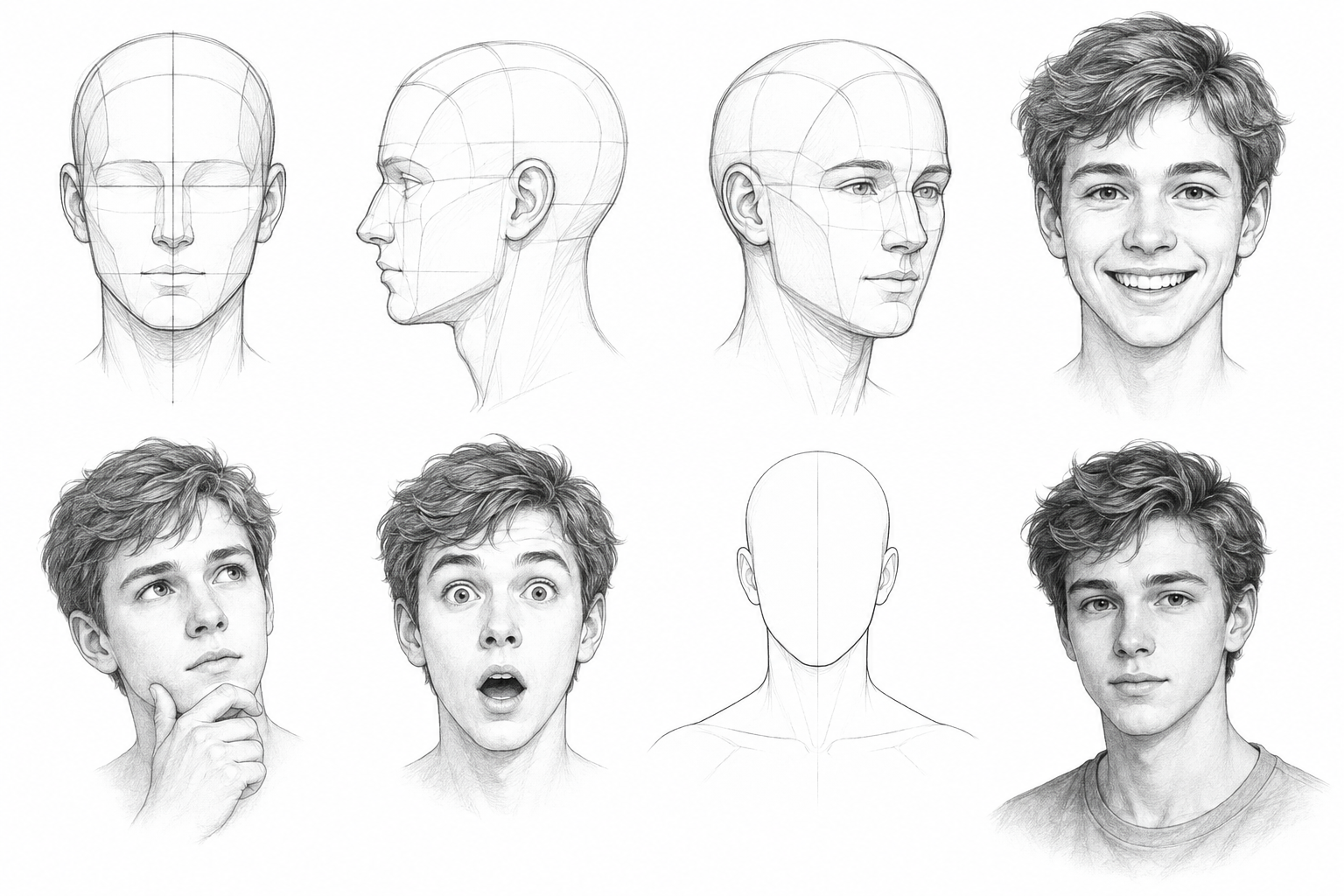
Shared feature reference. It may not show this task’s exact pose, accessory, or style. Use the teacher’s matching reference too.
Draw it step by step
Use a few value groups to show form. Invent an original cartoon interpretation. Exaggerate a drawing choice rather than mocking a real person or a group.
Start from the observed shape. Choose one feature to enlarge, shorten, widen, or curve more strongly; sketch three tiny options.
Plan a head, features, neck, and shoulders from one reference.
Find the lightest area, middle tones, and darkest small accents.
Shade in those groups, keep highlights light, and revise one feature after comparing.
Pick one option and redraw it clearly. Keep it consistent in a second pose or expression. Use bold, selective lines instead of realistic shading.
Watch out → Try this
Common drawing problem: Adding small details before the main shapes and placement are clear.
Repair: Return to the first subject step: Plan a head, features, neck, and shoulders from one reference. Compare the biggest shapes before refining.
Check your work: Can you point to light, middle, and dark areas? What did you exaggerate? Which two design features stay consistent across both drawings?
Materials: pencil, eraser, paper, and a mirror or teacher-approved reference. Optional black drawing pen; no painting required.
Finish a Portrait with Light and Dark: Make a Cartoon · Practice page
Name ____________________ Make light trials first. Divide a box further if your task needs extra versions.
1 · Observe and plan2 · First drawing3 · Change one choice4 · Independent application
My evidence: Can you point to light, middle, and dark areas? What did you exaggerate? Which two design features stay consistent across both drawings?
I changed __________________ because I noticed __________________.
My next practice goal: __________________________________________________