Load the brush without dripping.
Teacher shows one slow example.
TEACHER QUICK PLAN · 15–25 MINUTES
Brush Control: Kindergarten
Focus: Practice thin, thick, dry, wet, light, and bold brush marks.
Start: Move your hands in the air first. Name what you notice before using materials.
 SUCCESSFUL SKILL IN A PROJECT
SHOW STUDENTS BEFORE THEY BEGIN
See where this skill can go
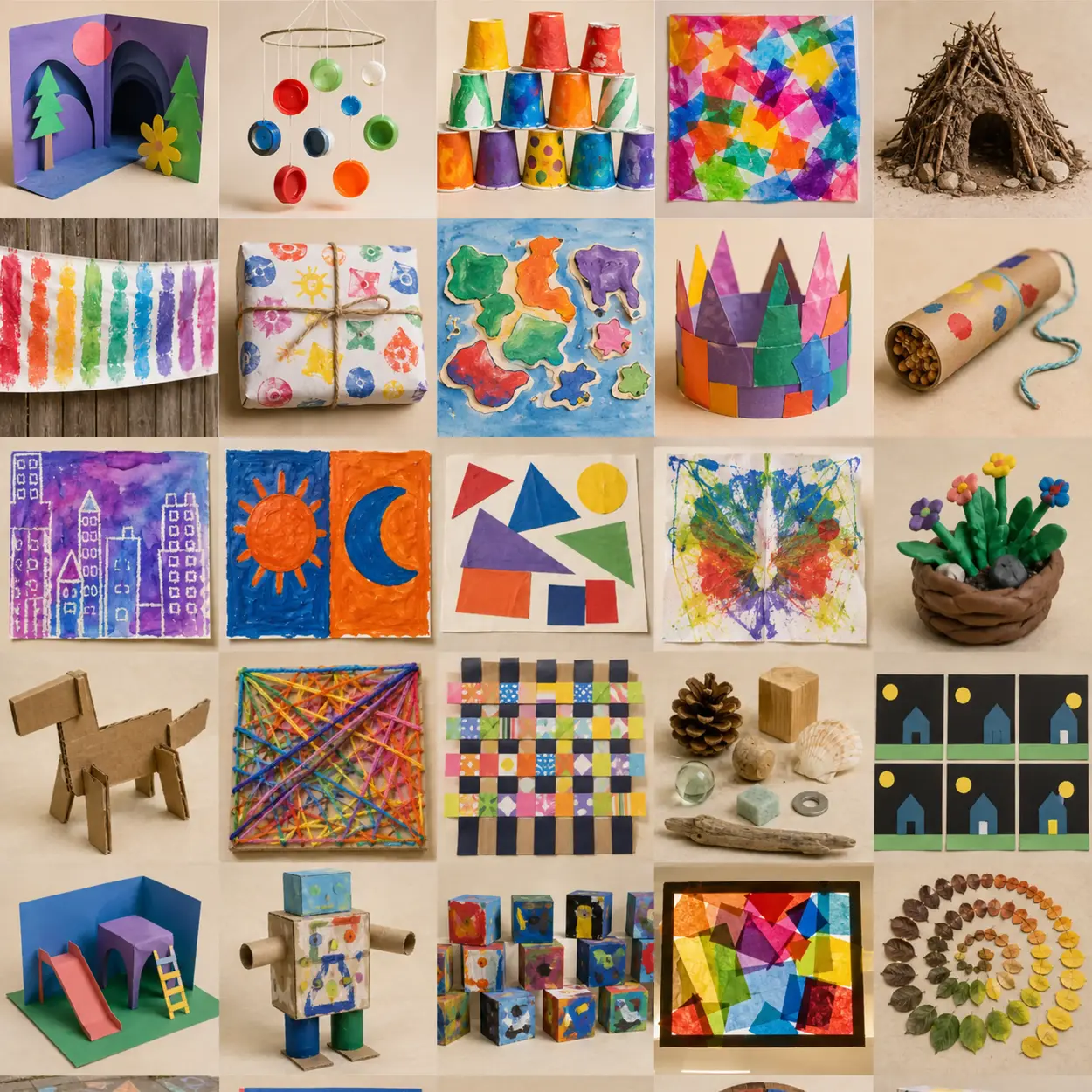
This Kindergarten example uses painting inside a finished project. Notice the technique, then cover the image so students invent their own subject.
OPEN THE MATCHING PROJECT: Watercolor-And-Crayon Resist City ↗VISUAL HOW-TO · READ LEFT TO RIGHT
Watch → Test → Compare → Improve
Change brush part: tip / side / whole brush.
Keep every first attempt.Look for different widths and edges.
Circle or point to evidence.Repeat the strongest choice and change one detail on purpose.
Explain what became clearer.THE FINISHED SKILL TARGET
What students should be able to do
Practice thin, thick, dry, wet, light, and bold brush marks. Students should show at least two tests and one visibly improved attempt—not a finished artwork.
Materials
- paint
- two brush sizes
- water cup
- paper towel
- practice paper
Demonstrate these actions
- Load the brush without dripping.
- Pull with the whole brush, then draw with its tip.
- Rinse, wipe, and reshape the brush before changing color.
20-minute teaching sequence
- 0–3 min · Name the skill — Tell students: “Today we are practicing painting, not making a finished masterpiece.”
- 3–7 min · Teacher demonstration — Show the three actions listed below. Keep the sample unfinished so students focus on technique rather than copying.
- 7–10 min · First test — Students complete Test 1 while changing one variable only.
- 10–14 min · Compare — Students point to, circle, or label what worked and decide what to change.
- 14–20 min · Improved try — Students repeat the useful choice in the larger box and intentionally improve it.
- Final 3 min · Check + reflect — Use the checklist, complete the sentence, and clean materials.
Useful teacher language
- “Show me the part where you practiced painting.”
- “What did you change between your first and second attempt?”
- “Point to the choice you want to use again.”
Common problems and quick fixes
- Paper is soaked — use less water and pause before layering.
- Colors turn muddy — rinse fully and limit each mixture to two colors first.
SUPPORT MATERIAL · PROJECT OR DISPLAY THIS CHART
Painting understanding chart
CONTROLTRY THISLOOK FOR
Brush parttip / side / whole brushdifferent widths and edges
Paint loaddry / ready / overloadedcontrol without unwanted drips
Layerone / two / three passescoverage or texture that changes on purpose
WORDS TO USEstrokeopacitylayerbrush load
MATCHED EDUCATIONAL EXAMPLE
See the skill in a trusted collection
Preview this teacher resource, select one age-appropriate example, and ask students to identify the same controls shown in the chart.
Move from practice to a project
After this practice, students are ready to use the strongest painting technique in a full lesson while making their own subject and composition choices.
PRINTABLE STUDENT PAGEPrint only the worksheet section below.
STUDENT SKILL-BUILDING WORKSHEET
Brush Control: Kindergarten
Follow the Studio Guide
- Set up the worksheet and materials for painting practice.
- Practice thin, thick, dry, wet, light, and bold brush marks.
- Make four tests, circle the clearest one, and use it again.
- Use the strongest test in the final practice box, but change one detail on purpose.
- Clean the workspace, then complete the reflection sentence.
Success check
Reflection
My favorite discovery was…
Use browser Print / Save as PDF