MODERN ART LESSONS · STUDENT WORKSHEET
Bubble Dragon: Tell It Without Words
Make a wordless comic strip featuring a dragon with a bubble wand. The character wants to make a giant bubble, but blows so hard that every bubble bursts. One possible ending: it tries a slow gentle breath. Invent a different kind ending if you prefer.
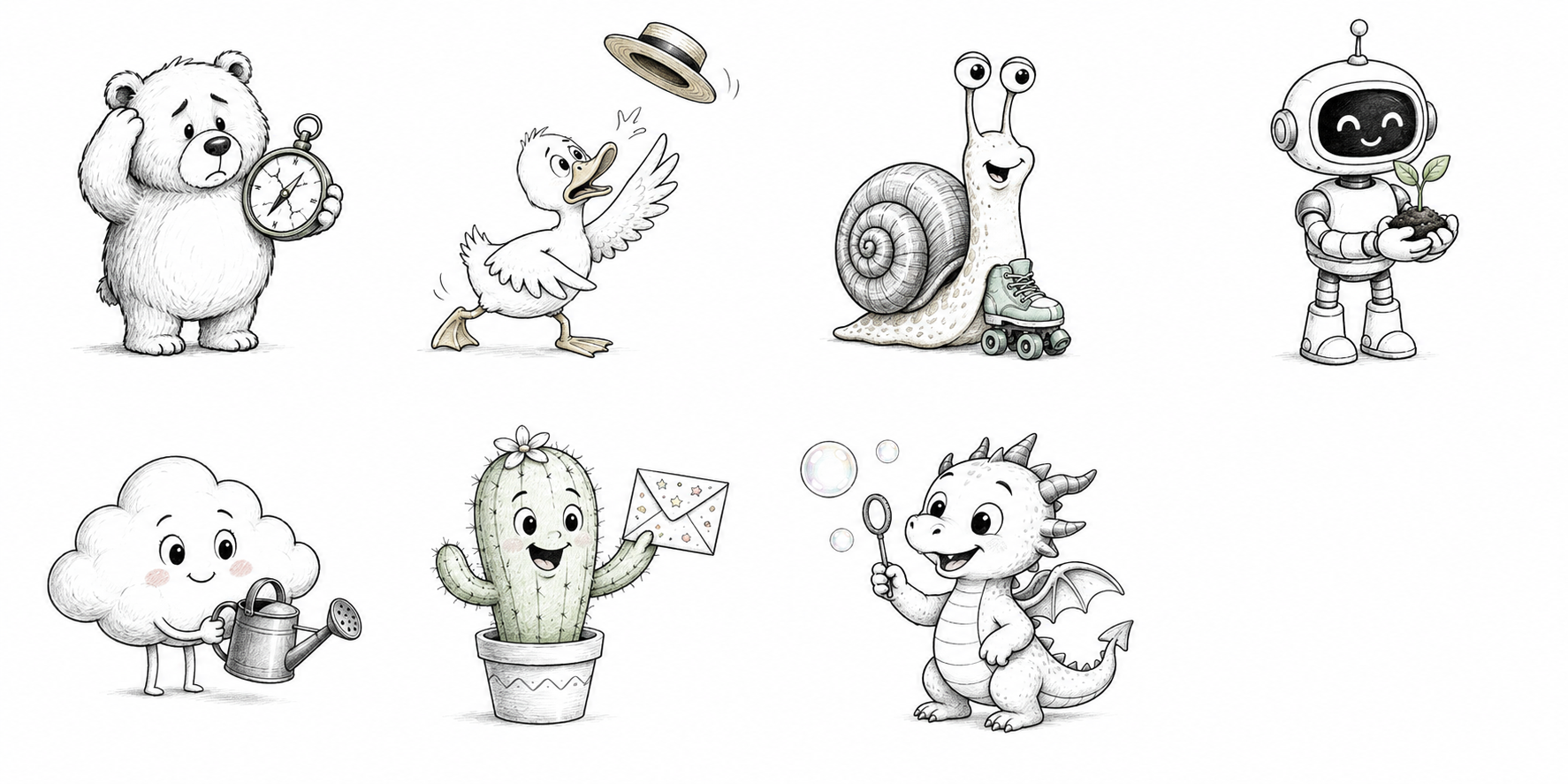
Character reference shared across ten skill lessons—not a picture of the completed assignment. Study the example for possibilities, then close or cover it. Your work should make different choices.
Story starter and example
The character wants to make a giant bubble, but blows so hard that every bubble bursts. One possible ending: it tries a slow gentle breath. Invent a different kind ending if you prefer. Panel 1 establishes the goal; panel 2 makes the obstacle visible; panel 3 reveals the solution. Older students add a reaction or a pause panel.
What to do
- Your finished project is a wordless comic strip featuring a dragon with a bubble wand. Read the story seed: The character wants to make a giant bubble, but blows so hard that every bubble bursts. One possible ending: it tries a slow gentle breath. Invent a different kind ending if you prefer.
- Start with curved snout, small wings, and a loop-shaped wand. These are helpful shapes, not a tracing template.
- Divide the page into a clear beginning, problem, and solution sequence.
- Sketch the action lightly in reading order. Repeat the character’s identifying features in every panel.
- Show the important change with poses, object placement, and reaction. Omit speech, captions, and sound-effect words.
- Give the strip to a partner without introducing the story. Note the first confusing panel and revise it. Plan for an unfamiliar reader; compare alternatives and revise pacing, emphasis, or consistency using feedback.
My project: a wordless comic strip featuring a dragon with a bubble wand. My chosen ending is…
BEGINNING sketch… PROBLEM sketch… SOLUTION sketch…
What changes between each panel?
Partner retelling… Unclear panel… Revision…
Story clue: How will I show that the character blows so hard that every bubble bursts?
Before feedback, I wanted the reader to notice… The reader actually noticed…
Revision: I changed… because…
Use browser Print / Save as PDF